
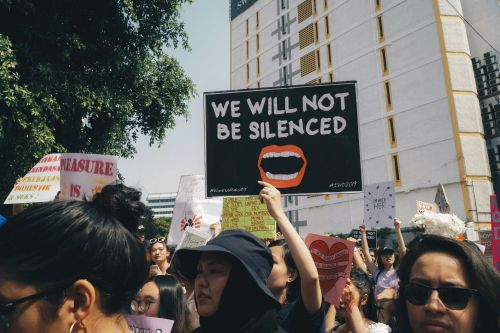
Last week’s High Court decision declaring that the amendments to New Zealand’s pay equity law were discriminatory and confirms what we all know. Government documents reviewed in the Court show that the amendments were made to save the government billions for Budget 2025 and not to create a “fairer system”.
We know that because when the announcement was made by the Prime Minister, he said that the changes to pay equity laws will save the government “billions of dollars”, although he later amended his narration to say that it was not the motivation for changing the legislation. The Deputy Prime Minister was more forthright "I actually think that Brooke van Velden has saved the taxpayer billions”. Mr Seymour also said
“women won't be worse off because of these changes".
New Zealand was a world leader in addressing pay equity. The Equal Pay Act was enacted way back in 1972 to ensure that New Zealand employees are compensated fairly based on the value of their work, regardless of their gender. The intention means that jobs requiring similar skills, responsibility, and effort should receive equal pay, even if the jobs are different. The Act prohibits sex-based discrimination in pay and provided a process for addressing pay inequities in female-dominated occupations.
In 2017 the then National-led government passed a forerunner to the legislation for the enabling pay equity settlements in the health sector with the Care and Support Workers (Pay Equity) Settlement Act. More recently in 2018, when it was in opposition, National supported the Labour government’s new Equal Pay Act, as well as the Equal Pay Amendment Act in 2020. Those changes were designed to extend a pay equity process to all occupations and create a clearer pathway for making pay equity claims. Both major parties seemed aligned.
But effectively overnight the coalition government made changes to the legislation that meant that 33 existing claims were blocked. It created a new pay equity pathway that meant that it would be much harder for a claim to succeed. Some of our most valued occupations - Plunket nurses, community midwives, hospice nurses and health care assistants, primary care nurses, nurses in residential care were effected.
In Tōpūtanga Tapuhi Kaitiaki o Aotearoa v Attorney-General, Justice Radich declared that the Equal Pay Act 1972, as amended by the Equal Pay Amendment Act 2025, is inconsistent with the right to freedom from discrimination on the grounds of sex under the New Zealand Bill of Rights Act.
The case was brought by five unions, including the New Zealand Nurses Organisation, the Public Service Association, the PPTA, the Tertiary Education Union and NZEI Te Riu Roa. They challenged the legislative amendments introduced by the Government in May 2025, which substantially restricted the ability of employees in predominantly female occupations to pursue pay equity claims.
The amendments have had several significant consequences:
- 33 existing pay equity claims were discontinued, requiring employees to start again under the new regime.
- the definition of a predominantly female workforce increased from 60% to 70% female employees, with that percentage required to have been maintained for at least 10 consecutive years.
- claims could no longer use comparators outside the relevant industry or sector.
- more substantial evidence was required before claims could proceed.
- employers were given greater opportunities to discontinue or opt out of claims.
- existing remuneration review provisions were removed, and new claims were prohibited for 10 years following a settlement.
The Court took nurses as an example, where women make up well above 70 per cent of the workforce. A group of nurses bringing a claim against a single employer, if the employer employed a male nurse it would need to select that nurse as the comparator. Comparison between remuneration rates and terms in those circumstances would reveal very little in determining whether the work has been subject to sex-based undervaluation. It is essentially an equal pay assessment only. It would not allow an assessment of pay inequity.
Justice Radich found that these changes materially disadvantaged women working in female-dominated occupations. The alternative remedies available under the Human Rights Act and Employment Relations Act were inadequate substitutes because they did not provide an effective mechanism for establishing appropriate remuneration for work of equal value, or of setting fair remuneration.
The Court then considered whether the discrimination could be justified under the Bill of Rights Act. Although the Government argued that the changes were necessary to make the pay equity system financially sustainable and more robust, the Court examined Cabinet and Treasury documents and concluded that the principal motivation was reducing the Government's financial exposure to pay equity settlements. The Court found that the Government had not demonstrated that the restrictions were necessary or proportionate. Less discriminatory alternatives could have achieved the Government's objectives without extinguishing existing claims and substantially restricting future ones.
The High Court formally declared the amended Equal Pay Act inconsistent with the Bill of Rights Act. But the declaration does not invalidate the legislation, which remains in force.
Why does it matter? The everyday reality is that women who are paid less than they should be will continue to struggle to put food on the table, pay back student loans, get onto the property ladder, pay their mortgage or rent, contribute to their KiwiSaver and afford their retirement.
The coalition traded addressing those issues for miniscule tax cuts (with a big cost of $14.6 billion over four years), increased defence spending and big tax rights offs for landlords and farmers. Hopefully the next government will address the discriminatory changes and right the wrong. Read more....