

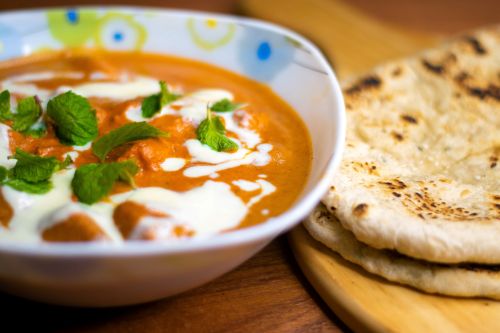
 Recently Shane Jones, a senior minister in the coalition government, said in an online video he would never agree with a "butter chicken tsunami" coming to New Zealand as a result of the India Free Trade agreement. Another politician, Auckland mayor Wayne Brown, recently referred to an RNZ staff member of Indian descent as "a Muslim terrorist" and commented on his beard while being escorted into the building for an interview.
To his credit, Mayor Brown apologised soon after and explained that the comments were a "fumbled attempt at humour". Minister Jones says his parliamentary colleagues have told him to tone down his language but he doubled down saying that he gets "cut-through on debates by deploying hyperbole".
The Human Rights Act provides that it is unlaw to incite hostility against, or bring into contempt, any group of people on the grounds of colour, race, ethnic or national origins. There is a high threshold to meet, because of the importance of the right to freedom of speech. Sometimes it only meets the test of “awful but lawful”.
In the workplace, under the Human Rights Act and the Employment Relations Act, an employee is racially harassed if the employer uses language or visual material that directly or indirectly expresses hostility towards the employee, and that it is hurtful or offensive to the employee, and it negatively impacts their employment, job performance or job satisfaction.
According to a Broadcasting Standard Authority 2026 report on offensive language, the most unacceptable terms in New Zealand often relate to race, ethnicity, or sexual orientation, with high sensitivity towards derogatory language used in public or media contexts. “Nigger” continues to have the highest sensitivity. The other top seven most totally unacceptable words across all contexts (considered totally unacceptable by half the sample) are primarily racial and cultural insults. They include “cunt”, “chink”, “faggot”, “gook”, “curry muncher” and “cocksucker”.
Recently, Simplicity’s chief economist Shamubeel Eaqub, co-authored a report on Social Cohesion in New Zealand for the Helen Clark Foundation. It revealed New Zealanders are becoming less comfortable with immigration. When commenting on the report Mr Eaqub was quick to clarify that the focus was only on “some immigrants”, namely, Indians and Chinese; “So it’s a very particular type of opposition to immigration. I don’t think it’s immigration, per se. I think it’s much more of a rise of racism that sits underneath it.” He went further saying “I think we have to call it what it is. I think sometimes using words like ‘immigration’ softens the blow, and gives us permission to speak about it as if it’s not a human on the other side of it.” He described Jones’ “butter chicken tsunami” as “clearly racist”.
According to the 2023 Census, there were slightly over 250,000 people identifying as Indian in New Zealand, the third largest ethnic group in New Zealand.
It is not Mr Jones first time. After an immigration announcement at the NZ First party conference last year the minister said the most common baby names had become "Singh, Patel" but "no one campaigned on it".
Shanti Patel, newly elected president of the Auckland Indian Association, said she was deeply saddened by Jones' latest comments. New Zealand historian Harpreet Singh when asked how such remarks by politicians impacted the Indian community in New Zealand said "from a mental health perspective, you feel excluded", “it affects job prospects, it affects kids at school, it affects hate in the workplace”, “it creeps into society and it affects everybody.”
So how did our government react. The Prime Minister says comments Minister Jones comments are unhelpful, but he stopped short of saying whether he thought they were racist. Pushed on whether he thought the comments were racist, Mr Luxon said it "doesn't sound right," and it was "alarmist" and "unhelpful" language.
Finance Minister, Nicola Willis, was more forthright. “It offended me and let me tell you, it has offended New Zealanders”, “Shame on you, Shane Jones”, “that kind of race-based rhetoric has no place in New Zealand politics”. Good on you Ms Willis!
The Trade Minister Todd McClay says Indian media questioned him about Mr Jones' "butter chicken tsunami" comment when he was in India signing the Free Trade Agreement. He says he told them the New Zealand First MP was entitled to say what he wanted - but it was not a widely held view.
The Leader of the Labour Party, Chris Hipkins, called out Mr Jones comments saying if he were Prime Minister he would not put up with Shane Jones' "racist" comments. "There is no room for racist rhetoric in any government that I lead".
Unlike the Auckland mayor, Minister Jones appears unrepentant, and is clearly targeting a well-established ethnic community in New Zealand. Employers are expected to model behaviours that do not include racism or racial harassment, and to deal with any complaints of racism or racial harassment in the workplace. Do we really expect better standards of our employers and workers in New Zealand’s workplaces than we do from the leaders of our country? In “management speak” principles and values should be a “bottom-line” not a “nice to have”. As leader of our government, shame on you Mr Luxon for allowing this type of behaviour in our government. Read more...